Hong Kong prepares to move its cash market to T+1 settlement
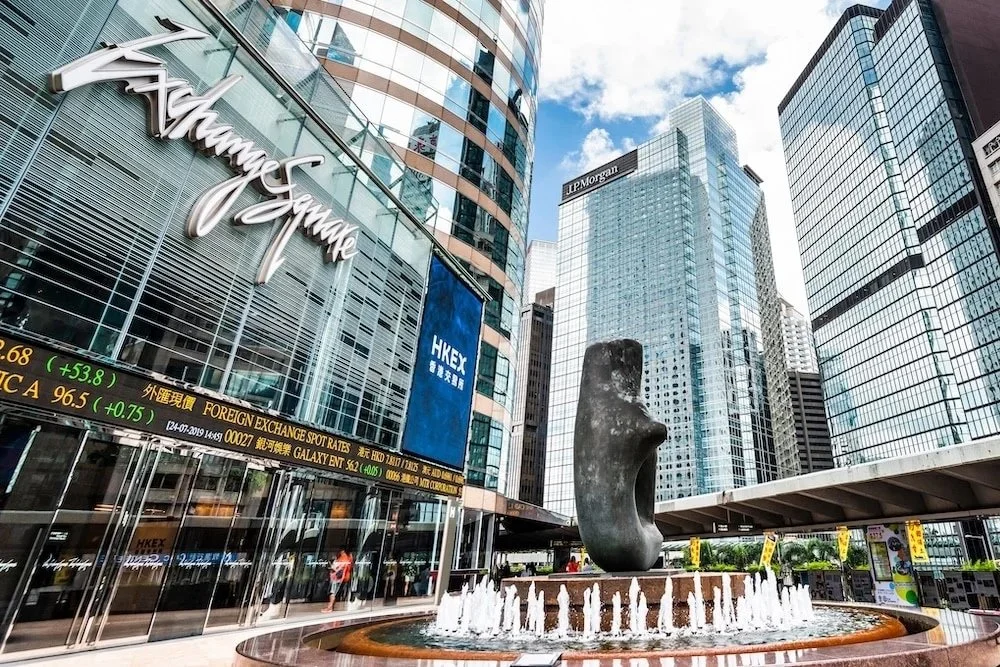
Hong Kong will align with over 80% of global cash market capital on a shortened settlement cycle
Hong Kong’s cash market has operated on a trade plus two business days (T+2) settlement cycle for over three decades. The system provides market stability, efficiency, and reliability. But that framework is about to change with Hong Kong Exchanges and Clearing’s (HKEX) plan to shorten the cycle to T+1 in the fourth quarter of 2027.
Following a July 2025 discussion paper, HKEX published a consultation paper in April to finalise the plan, noting that industry respondents broadly supported the move.
“While industry respondents provided feedback and noted several considerations, the consensus was that a move to T+1 represents the right balance to advance the market, while retaining the core advantage of our current clearing and settlement framework,” HKEX stated.
The move to T+1 is a global direction. China’s A-share market has been operating a T+1 settlement model since 1993, but with a unique “securities on T-day, cash on T+1” structure. Then India implemented T+1 settlement in January 2023, followed by US, Canada and several other countries in May 2024. Europe, UK, and Switzerland are scheduled to transition in October 2027. When all completed, over 80% of global cash market capital will settle on a T+1 basis.
Hong Kong risks becoming a settlement laggard if it stays on T+2, which could weaken its competitiveness as an international financial centre.
Under the proposed framework, HKEX will implement several operational changes to compress the settlement cycle by one full day. The trade amendment window, currently open until T+1 morning, will close on T-day at 5:00pm. The final clearing statement, which today arrives at 2:00pm on T+1, will be generated at 8:00pm on T-day, giving clearing participants overnight visibility. The settlement instruction window will extend until 10:00pm on T-day, up from 7:00pm.
Trading hours remain unchanged. Settlement continues to operate in four batch runs ending at 3:45pm, using the same delivery-versus-payment (DVP) model. Severe weather trading arrangements are untouched.
The time zone compression
The compressed settlement cycle should not have much impact on local retail brokers that operate entirely within Hong Kong’s time zone and run on client pre-funding. The real challenge falls on international institutional investors, who account for over 60% of cash market turnover.
Hong Kong is in the GMT+8 time zone, ahead of Europe and the Americas. Under T+1, a fund manager in London or New York will effectively operate on a T+0 timeline for instructions, allocation, confirmation, funding, and foreign exchange. By the time their trading day begins, Hong Kong’s settlement clock is already well advanced.
According to a recent survey of 244 firms globally by consulting firm The ValueExchange, only 59% of allocations and 77% of confirmations from North America are currently sent to Asia Pacific markets on T-day because their nighttime is Asia Pacific’s daytime. Europe fares worse, with only 42% of settlement instructions sent on T-day, as most Asia Pacific cut-offs occur during the European night.
Under T+1, those figures must move much closer to 100%. Without 24/7 operations or fully automated straight-through processing (STP), many firms will struggle to meet Asian cut-offs.
The same survey reveals that 56% of respondents cited funding and time zone mismatches as significant risks when trading with tier-one Asia Pacific markets, including Hong Kong, Australia, New Zealand, Japan, and Singapore. For frontier markets, the figure rose to 83%.
HKEX’s consultation paper emphasises that firms must complete funding and foreign exchange (FX) arrangements “as soon as practicable” after trade execution. The ValueExchange survey highlighted FX deadlines as a top concern, with 48% of respondents flagging the Hong Kong dollar as problematic under T+1, similar to the levels for Australian dollar (43%) and the Japanese yen (41%).
For international firms settling Hong Kong dollar trades, same-day FX booking will become a mandatory requirement rather than a best practice. Otherwise, firms will face a difficult trade-off: pay pre-funding costs or incur failed trade costs.
Meanwhile, some manual practices that function under T+2 such as faxes, emails, spreadsheets, and exception handling will become unworkable. While cheques are not explicitly banned, paper cheque deposits must be completed on T-day. Since cheques settle only on the next business day, any reliance on paper-based funding or securities movements will become untenable.
A centralised post-trade tool
One notable proposal by HKEX is a centralised post‑trade workflow tool for institutional stakeholders. The concept includes a centralised matching platform, a single standing instruction settlement (SSI) repository as a “source of truth” for the Hong Kong market, settlement instruction automation with overnight processing capability, and a real‑time management information system dashboard for settlement status and fails management.
HKEX already operates the city’s central securities depository and securities settlement system. Extending that role into pre‑settlement matching and SSI management would align Hong Kong with other major markets’ best practices. However, HKEX has stated that it will only build the tool if there is sufficient market demand.
Benefits versus costs
The consultation paper cited clear benefits from other markets’ experience, including lower unsettled risk, higher capital efficiency, and reduced margin requirements. In the US, T+1 reportedly reduced clearing house margins by over 20%, which are significant savings for large clearing participants.
But costs are less clear. Technology upgrades, staffing, system testing, and increased risk of settlement fails during transition will stress market participants.
The ValueExchange survey found that 70% of custodians anticipate trade fails could increase by as much as 25% under T+1 in Asia Pacific. Notably, 31% of firms in the US were still struggling with trade fail pressures after 12 months of T+1 operation.
Hong Kong and other Asia Pacific markets typically operate with “zero tolerance” for fails, reinforced by penalty and mandatory buy-in regimes. HKEX recognises this tension but does not propose relaxing buy-in rules. Without more flexibility, such as extended settlement batches, a lender‑of‑last‑resort facility for securities, or more nuanced exemption measures, firms may become more conservative in lending or trading hard‑to‑borrow stocks. That could potentially affect market liquidity.
Transition impacts will be uneven. European and smaller global custodians face the sharpest time zone disadvantage. Without 24/7 operations, they will struggle to meet Asian cut-offs. Small to mid‑sized Hong Kong brokers, especially those offering margin or unfunded retail accounts, will face earlier cash calls and higher failed trade risk. Without in‑house treasury capabilities, they will need to rely on correspondent banks or custodians for same‑day FX and funding at higher costs.
By contrast, large global custodians with 24/7 operations and automated FX capabilities are better positioned. Well‑capitalised brokers that can internalise funding and securities lending will have an edge, as will fully automated institutional brokers using matching platforms and SSI repositories. HKEX itself could also benefit if its proposed workflow tool gains wide adoption, creating a new stream of revenue.
Is a fourth-quarter 2027 rollout realistic?
HKEX estimates around 15 months of lead time from detailed specifications to launch. That timeline would require intensive work by the industry: cross-functional teams, budget allocation, mapping end-to-end settlement flows, and engaging custodians, FX providers, and securities lending counterparties.
If implemented successfully, Hong Kong will stay ahead of other regional hubs. Australia and Korea are targeting late 2020s, while Japan and Singapore are moving cautiously with no target timelines.
However, Hong Kong needs to avoid creating arbitrage and operational friction in moving early without regional alignment on messaging standards, settlement batch timing, and FX delivery cycles.
The ValueExchange survey findings point to three key success factors. First, automation of pre‑settlement matching and SSI management is indispensable, as the US experience shows. Second, same‑day FX availability is essential; without it, funding will break. Third, regional coordination on standards and cut‑offs is necessary because Hong Kong cannot afford to be an island.
T+1 is not a technical upgrade; it is a re‑engineering of Hong Kong’s settlement operating model. Firms that fail to automate, under-invest in transition readiness, or are unable to adapt their business models to the accelerated settlement cycle will fall behind.
*This article was published in Asia Asset Management on May 29, 2026 under the same title.